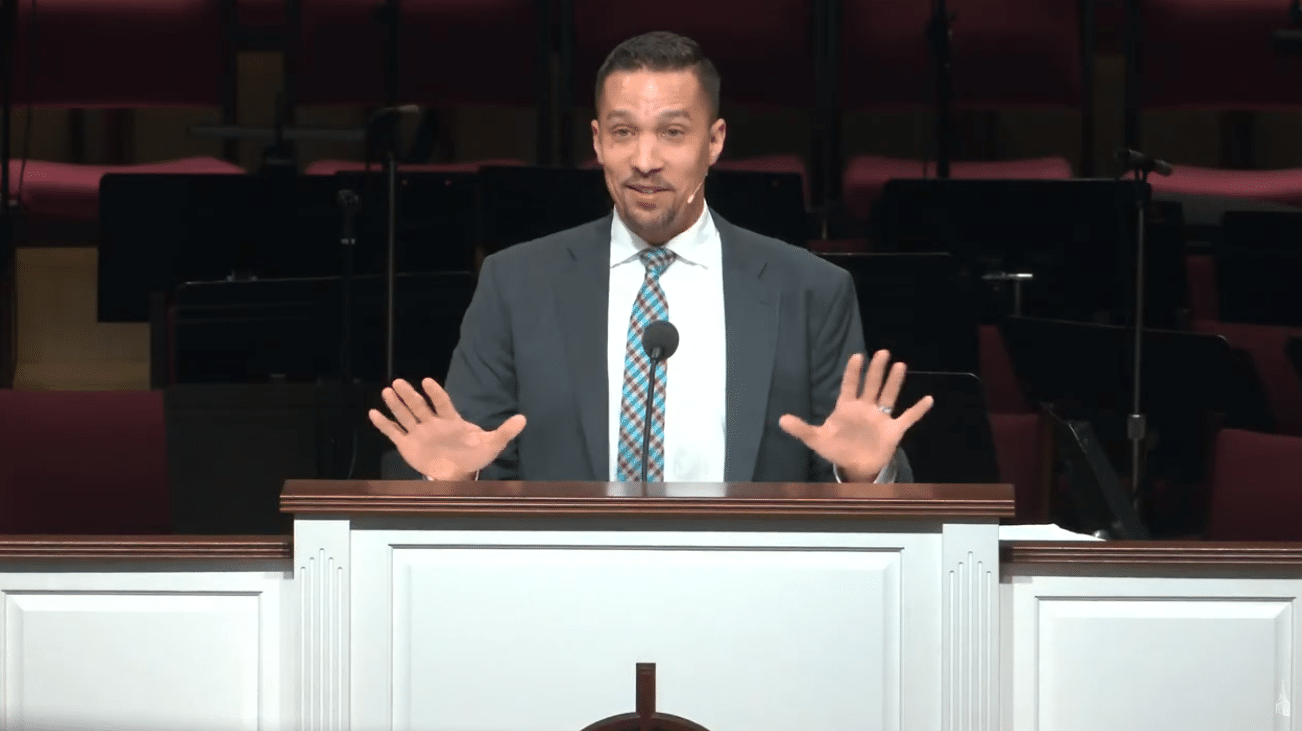
Help of the Helpless
Tom Groelsema, Speaker
2 Kings 4:1-7 | October 25, 2026 - Sunday Morning,
Please turn with me in your Bible to 2 Kings 4. 2 Kings chapter 4, and our text this morning is verses 1-7. 2 Kings 4:1-7. Our pastor preached this morning in Oxford, England. He was there for a conference for the last few days, and then he preached at – is it an IPC church, Harry? Is it an IPC church in Oxford? Andy Young’s church? Not sure. Okay. I’m not sure either. Andy Young, he’s a pastor that is quite well-known here in the States and interacts with many of us in the PCA. So, Kevin preached at his church this morning. He is now en route to London and is preaching this evening in London. So, would you pray for him sometime today as he preaches? But with him not being here, of course, we’re not in Romans this morning. And Sheri asked me this week and someone else asked me this morning, why are we preaching from 2 Kings? Or why did you pick this passage? And I said, well, in my thinking a number of months ago when we set up the preaching schedule, knowing that we would be in Romans week by week, I thought, well, we should have a sermon from the Old Testament. And then thinking about Romans being an epistle, how about if we have a sermon from a historical narrative? So, this is just an effort to give us a well-balanced diet of biblical text. So, before we read, let’s pray for God’s help.
Heavenly Father, as we come to this part of your Word, this story from Scripture, we pray, Lord, that you would feed our hearts and our souls. We pray that you give us eyes to see the wonder that because of Jesus, we have a Father who loves his children, a Father who is a help to the helpless, a Father who is one who provides for the poor and needy, for his children. And so, Lord, would you increase our faith and our trust as we think about this part of your Word? We pray it in Jesus’ name. Amen.
Let’s read together now from 2 Kings 4.
“Now, the wife of one of the sons of the prophets cried to Elisha, ‘Your servant, my husband, is dead, and you know that your servant feared the Lord, but the creditor has come to take my two children to be his slaves.’ And Elisha said to her, ‘What shall I do for you? Tell me, what have you in the house?’ And she said, ‘Your servant has nothing in the house except a jar of oil.’ Then he said, ‘Go outside, borrow vessels from all your neighbors – empty vessels, and not too few. Then go in, and shut the door behind yourself and your sons, and pour into all these vessels, and when one is full, set it aside.’ And so, she went from him and shut the door behind herself and her sons. And as she poured, they brought the vessels to her. When the vessels were full, she said to her son, ‘Bring me another vessel.’ And he said to her, ‘There is not another.’ Then the oil stopped flowing. She came and told the man of God, and he said to her, ‘Go, sell the oil, and pay your debts, and you and your sons can live on the rest.’”
This past week I was talking to Aaron Andrade, one of our pastors, and he was telling me about some job training that he has been doing with some members in the church – some of those members underemployed and a few of those members unemployed – and he’s been helping them think about new opportunities. And it kind of struck me as he was telling me about this that we may not think about that as much of a need in south Charlotte – helping somebody to find a new job or somebody who’s without a job. We live in a city of good jobs, nice homes, high income, and that conversation simply reminded me that there are some even among us who may be scrambling for their daily bread. Heard this last week in a conversation about another person, a single person – single woman – who’s really struggling to make ends meet, and she’s going to speak to her employer about some other options. Maybe the employer could do a little bit more for her.
Well, friends, this passage is really kind of an ordinary story. We don’t need to spiritualize what’s happening in this text. This passage simply says God cares about things like that, about people like that. This text was initially, of course, written to Israel and meant to be an encouragement to them. It’s found in the Kings. You know the story of the kings. The story of the kings is a really sad story. So much disobedience. So many of the kings of Israel who were unfaithful, who walked in the ways of their forefathers and caused Israel to sin. And the people often followed the kings. And the story of the kings is a story of God’s people spiraling down toward destruction at the hands of the Assyrians for Israel, at the hands of the Babylonians for Judah. And in fact, when God’s people received these books, 1 and 2 Kings, they were already in exile. So, these were written to an exiled people, a people who had experienced the destruction of Jerusalem, the destruction of the temple. Their homes were destroyed. They were uprooted. They were brought to a foreign land. They were refugees, and they must have wondered when they were in exile, has our covenant with God been broken forever? And they read these stories, and they were reminded of their sinfulness. They were reminded what had brought them to the place where they were at. But they also had little glimmers of hope that God still cared for them, and this passage is one of those.
With your Bibles open, you can see all across chapter 4, into chapter 5, and into chapter 6, there are a series of stories about God’s power at work for his people. His power over debt, the passage we’re looking at this morning. His power over infertility, verses 8-17. His power over death, verses 18-37. His power over drought, 36-44. His power over disease, chapter 5:1-27. His power over difficulty, chapter 6:1-7. Story after story after story. I wonder if you see yourself in any of these categories with any of these issues? And they were meant to show this people in exile that God is at work in the common, painful trials of life so that they would have hope, so that they would not be in despair. Well this series, it begins with the saddest, most desperate case of all: this poor, helpless widow. And it’s simply a reminder if God would care for her, do you believe? Don’t you know that God will care for you?
So, let’s first of all think about her, this desperate widow. And you see a number of things in the text that describe her plight. Look at verse 1, “Now, the wife of one of the sons of the prophets cried to Elisha, ‘Your servant, my husband, is dead, and you know that your servant feared the Lord, but the creditor has come to take my two children to be his slaves.’” So, here’s a woman – her husband has passed away, she is a widow, and of course, as we know, losing your spouse is difficult in any age. Some of you know that all too well here this morning. Your husband is gone. Your wife is gone. You bear the pain of that. Day by day, it’s difficult. Widows, widowers have said to me, coming to church on Sunday is one of the most difficult things because there in front of me, before my eyes, are families and couples, and here I am alone again. Hard in any age, but especially hard in biblical times and especially for women, because being a widow often led to severe economic destitution. It led to social marginalization, high vulnerability. This woman had lost her wage earner. Her husband was gone, the one who would work to provide for the family. He’s out of the picture. As a widow, she was not able to own property. And so, her family inheritance, her portion in the land of promise, was in jeopardy. Where did she belong? Where was her home? And then she had no one to represent her in court, no legal protection. She could easily be exploited by dishonest landowners or corrupt officials. Friends, you see all of those things at play in the story of two other widows in the Bible, Naomi and Ruth. Remember how that story goes? Ruth’s husband is gone. Naomi’s husband is gone. And Ruth has to try to fend for herself. The wage earner in her family is gone. And so, she goes out to the field to gather grain after the reapers went through. The reapers come through. They take what they want. And there Ruth is, maybe with some other widows, just picking up leftovers. That’s all she could do to provide for herself. Boaz secured for Ruth a place in the land when he married her. As the next of kin, he solidified the fact that she belonged to the people of God. She now had an inheritance. And then as she was gleaning, Boaz says to her, “Have I not charged the young men not to touch you?” The exploitation that Ruth and this widow here in our text would have been subject to. And so, first of all, she has no husband.
Second, she’s about to be without children. Her sons are about to be taken away into slavery. Maybe they, too, were her lifeline. They could work. Her supporters, her income, but now they’re going to be taken away to pay off her debt. This is something that was not uncommon among God’s people, and there were regulations about how this ought to happen. Leviticus 25:39, listen to that verse: “If your brother becomes poor beside you and sells himself to you, you shall not make him serve as a slave, but he shall be to you as a hired hand.” So, someone becomes poor, and I can’t fend for myself: “Trevor, can I be your slave? Buy me. I’ll serve you.” And yet, do you hear what the passage said? The passage says when that happened in Israel – so this must have been sort of commonplace among God’s people – when that happened in Israel, the slave was not to be treated so much as a slave but as an employee. He’s to work for a wage. He’s a hired hand. And yet, we know throughout the Bible that slaves were treated poorly. They were not treated as employees or as hired hands. Life as a slave was bitter. And so, here is this widow thinking, “What is going to become of my sons who become slaves so that the debt can be paid off?” Of course, we know she was poor. All she had in her house was a jar of oil. No life insurance policy to draw from, no emergency funds, only this one jar of oil. And notice also that she is nameless. We don’t know her name. She’s anonymous, has little identity. She’s depersonalized. The Bible is telling us that she’s kind of a nobody. You could not find a more desperate condition than this woman faced.
And yet, I want to point one more thing out about her. Not just her plight, but her spiritual predicament, because there’s one other thing that is said about her in this text that is important to notice. And that is this: she was a fearer of God. Do you see that? Verse 1, she is described as the wife of one of the sons of the prophets. The sons of the prophets were a band who followed and supported the most prominent prophets in Israel. Prophets like Elijah and here in our text, Elisha. These sons of the prophets were like disciples, maybe like the twelve in relationship to Jesus. They went about following these prominent prophets, helping, supporting these prophets, and her husband was one of the sons of the prophets. And so, she can say to Elisha about her husband, “Your servant, my husband, is dead.” Her husband was one of those who served Elisha. She repeats that same thing in verse 1, and then notice what she says about herself in verse 2. She says about herself, “Your servant has nothing in the house except a jar of oil.” Friends, this woman is a woman of faith. She’s attached to the prophet of God, and this is what made her plight even more painful. Just listen one more time to the tension that is found in her statement, her opening statement to Elisha. Verse 1, she says, “You know that your servant feared the Lord, but the creditor has come.” You know that my husband and I followed God, but what about the creditors who are coming to take away my boys? She and her husband had resisted the spiritual downward spiral that was found among God’s people that you read about in the Kings. Down, down, down, away from God, away from God, away from God. They had resisted that. And yet, she’s going to lose her family. She had been faithful to the Lord, but where was the Lord as her husband is gone and her sons go off into slavery?
There’s a book written years ago, When God Doesn’t Make Sense, and the author of that book said often Christians face what is called the betrayal barrier. It’s not true. God doesn’t betray his people, but this sense sometimes that we might feel: God, where are you? Something like the disciples when they’re with Jesus in the boat on the sea in the storm, and from that boat they say to Jesus, “Don’t you care that we’re going to drown?” See, it’s not just unbelieving people that ask that question. Sometimes those who love the Lord wonder, don’t you care, God? Friends, don’t we meet this in a multitude of ways, sometimes in our own bitter providences? The man who after many years of marriage comes to know Christ. He becomes a believer, and his wife says, “I don’t want any of that.” And she divorces him. I’ve come to know Jesus, and that’s what happens. We think about the couple who earnestly followed the Lord in ministry throughout their entire life. They’re getting ready to retire, enjoy some time together, and the wife is diagnosed with cancer and quickly passes away. Or how about the PCA pastor who was coming home from General Assembly this past summer, and his wife and his children were in a serious accident, and his three-year-old tragically died. This widow says, “Your servant feared the Lord, but the creditor is coming.”
Well, friends, not only is this a passage about this woman, but of course, what’s more important is this is a passage about God and God’s gracious ways with this woman and his gracious ways with us. And I think what we have in the rest of this text is really a pattern for how God typically cares and works in the life of his own. Four things I want you to see here. First of all, this woman expressing her need. So, you see this in the exchange between the widow and Elisha. She comes to Elisha. She seeks out the prophet of God. She knew where to go in her need: to the Lord. And Elisha says to her – he says, “What should I do for you? What do you have in the house?” And he drew out of her her need. She has to respond. She’s faced – because of the questions that he’s asking, she’s faced with her desperate need. I have nothing in the house except the jar of oil. I wonder if she’s thinking to herself, I don’t need to be reminded of that. I’m trying to forget about that. Yet, by the questions that he asked, she was not able to, and friends, that drove her to the source of help. This is simply a reminder to us that God is pleased to care for us as children and also that God delights when we seek him. He loves to care for us, but he delights when we seek him and go to him and cry out to him – to come in our desperation, in our emptiness to go to him, the great provider, to say, “Lord, I need you.”
I don’t know if any of you have ever read the book – written probably a decade ago, maybe a little bit little bit longer – book by Paul Miller called A Praying Life. And Paul Miller says in that book, none of us like being exposed. We have an allergic reaction to dependency, but this is the state of the heart most necessary for a praying life. A needy heart is a praying heart. Dependency is the heartbeat of prayer, and he goes on: Jesus didn’t come for the righteous. He came for sinners. The very things we try to get rid of – our weariness, our distractedness, our messiness – are what gets us in the front door, for this is how the gospel works, and this is how prayer works. Dependency is the heartbeat of prayer. I need you, God. I need you, Lord. I have nothing to bring. This is the heartbeat. It drives us to prayer. And Elisha took this widow to see her need by asking her what she needed, and he was available to her. What’s interesting is that this is quite the contrast. Quite the contrast to one chapter before, verse 13, when Elisha says to the king of Israel – now, not to a widow, not to a helpless, nameless widow, but to the king of Israel – Elisha says to him, “What have I to do with you?” What does he have to do with this widow? Everything. He’s not there for the king of Israel, but he is there for this widow. And you might think to yourself, who am I? I am a nobody like this widow. Helpless, nameless. And friends, through Jesus, you have access. Whoever you are, you have access to the Father to cry out – the choir sang it this morning – to cry out to God, Abba Father. You hear me; you love me; you know me. You may have heard this quote before from Tim Keller: the only person who dares wake up a king at 3:00 a.m. for a glass of water is a child. We have that kind of access. So, she expresses her needs.
Second, she expects God’s help. To the widow’s response that she only had one jar of oil, Elisha says, “Go to your neighbors. Go to your neighbors. Get their vessels, bowls, flasks, cups, jars, pots, whatever they have. Go get it.” And he’s more specific than that, even. Go get those empty vessels. So, not vessels that are already full of oil. They need to be empty. Nancy Guthrie has a great line in one of her books, “God does his best work with empty.” Get empty ones. And then he says to her, not too few. In other words, get a lot of them. Get many of them. God is about to do something big, isn’t he? Collecting the vessels raised the expectations. Friends, when you come to God, do you come expecting? I don’t know if you find yourself in this place – I do sometimes, shame on me – but I pray sometimes and thinking in the back of my mind, well, God’s not really going to do that. How many times do you find yourself praying for somebody with cancer? I know where this goes. I don’t think God’s really going to do that. Praying for healing, it probably isn’t going to happen. James says when we pray that way, we are double-minded people, unstable in all of our ways, and we ought not to expect to receive anything from God. That’s not how we ought to pray. Because remember, “Now to him who is able to do far more abundantly than all we ask or think, according to his power at work within us, to him be glory in the church and in Christ Jesus.” To him who is able to do far more abundantly than all we ask or think. That is the kind of God that we have. What an encouragement to us when we come to God with our needs. What’s really interesting here is that as often that as God often does, with this woman he took the problem and made it the solution. One vessel of oil to many vessels of oil. This is how often God works in our life. It’s what Jesus did with the disciples feeding the 5,000. What do you have? Well, we just have five loaves, two fish to feed 5,000 people. Aha. Take those fish. Take the bread. And God feeds 5,000 people.
I’m reminded of this in our own life. Sheri and I, we moved in 2020 down here. I promise this will be the last COVID illustration I use, because who wants to remember that, right? Get sick of talking about that six years later. But here we are: 2020, we moved down. We’re driving down in the middle of March, and as we’re driving down, we’re on our way, and we find out that everything in Michigan and North Carolina is shutting down. We’re going to a state that’s not even open. What are we going to do? Well, friends, all of that led to us being delayed in finding and buying a home, but you know what it did? It put us in with Bobby and Laura so that we were not alone in a new place, knowing no one, but in a community with friends. And it also allowed Sheri to keep teaching. She had left her job in Michigan, and everything shuts down, and she calls the principal up in Michigan and says, “Well, if everything is going to be remote, why can’t I teach from North Carolina?” And she had a job. I wonder if you ever see this kind of thing in your own life where the Lord takes the problem and uses it as the first step in the solution and answer to your prayers?
Number three, this woman encounters God from gathering the vessels. Elisha told the woman to go in, shut the door behind her and her sons. They began pouring oil, her oil into those vessels. Raises a question, doesn’t it? Why did she need to do this behind closed doors? Why does he say to her, “Shut the door. Go in. Shut the door. Start pouring.” Why was this done in private? Why away from the view of others? I read that, and it reminded me of the instructions of another man of God – our Lord Jesus, when he taught us to pray: when you pray, go into your room, shut the door, pray to your Father who is in secret. We know that Jesus is not opposed to public prayer. He’s not telling us the only way to pray is you and the Lord. You can pray in groups, pray as a congregation. The early church often gathered together in prayer. Of course, what Jesus was opposed to was prayer in which we’re trying to draw attention to ourselves, in which we’re putting on displays of piety by which we try to impress other people. So, Jesus is trying to say that prayer is not a spectator sport, right? Prayer is not the kind of thing where we try to get a bunch of people around us. Listen to what I’m saying, and be impressed with how godly I am as you listen to my prayers. It’s fine for others to hear us pray as long as we’re not out trying to impress them. Prayer, in a sense, is not a threesome. Prayer is not about God, me, and someone else that I take along to observe. It’s more of a twosome. It’s about you talking with the Lord. It’s about intimacy with him. And I think that’s what this woman and her sons were to experience. Behind closed doors, here’s this woman and her sons, meeting with the Lord, at least watching what the Lord is doing, seeing God at work. No distractions, no temptation to believe that her needs were met in some other way than God. Only God could do this. And being there alone with God made it obvious to her. This was not a show to impress others, an encounter of experiencing the provision of God.
And she obeyed. That’s the other point that’s made in this text. She’s told to go behind closed doors, and so she went, verse 5, from Elisha, and she shut the door behind herself and her sons. She went away from Elisha. She shut the door. She began to pour. And notice this: it was her obedience that became the channel through which God supplied. As she obeyed the Lord, here come the answers from God, and that, too, is how God usually works, isn’t it? We pray, but we’re also called to obey. We pray, and we’re called to work. We pray that God would give us a job, and we should go out and put out an application. We pray that God would give us daily bread, and we should go to work in the morning. It’s not one or the other. It’s both/and. Someone described it like this once to me, that prayer and work is like walking. You got to have both feet to do it. And so, I’m praying, but I’m not working. And I’m praying, and I’m praying, and I’m praying, and I’m praying, and I’m praying, or I’m working and just working and not praying and just working. But when I pray and when I work and I pray and I work – don’t worry, I won’t fall off the edge – I’m doing exactly what the Lord has called me to do. And here’s this woman. Take your sons, go behind the doors, watch God work. And she did so. And where did that lead to?
This last point: it led to her experiencing God’s supply. She poured oil into the vessels one by one. They were full. God multiplied the oil. God poured out his provisions from heaven, and when there were no more vessels, there was no more oil. There was an abundance that met her need, and then God stopped, and your needs have been met. Her daily bread was supplied, and she was able both to pay off her debts – the immediate crisis – and she also had enough to live on the rest. God met her ongoing needs as well. God promises to give us our daily bread, but in his generosity, friends, doesn’t he so often give us so much more? Coleson read for us from Psalm 145 a bit earlier in the service. A few lines of that psalm I just love: it says, “The eyes of all look to you, and you give them their food in due season. You open your hand and satisfy the desire of every living thing.” Our God is the God of the open hand. God is not a God of the closed fist, but a God of the open hand who pours out blessing upon blessing upon blessing upon blessing to us. Do you know him that way? Sometimes we wonder, you know, God, do you delight in keeping things from us? No, he loves to give things to us, to give us what we need, and we can trust him to supply.
I think about a couple in my previous church who were going through an extended period of unemployment. Things were getting really tight, and they came to me to tell me that in their church mailbox – so we had little boxes in church; everybody had their own little mailbox – but in their church mailbox was a check with a note, and the note said this: “We were selling something recently. We didn’t know what price to ask. We were praying about it, and we decided whatever we would get over a certain amount we would give away, and you came to mind.” And there was a check in their mailbox for $600, just exactly what they needed in those tight times.
Let me just summarize three very brief points that this text reminds us of. First of all, God cares about our daily bread. It’s just a common story, isn’t it? And God cares about common things. He cares about your clothes. He cares about your food. He cares about your home. He cares about your paycheck, cares about your health, just the daily, rudimentary things of life. He cares about our daily bread. He cares about his helpless, nameless, needy, desperate children who need it. Second, he provides it. So, Jesus taught us to pray for it. And friends, we would not be taught to pray for something that our Father would not have an open hand for. It doesn’t mean, of course, that sometimes we might not struggle. There are those trials. There are those troubles that come our way. But remember what we sang a moment ago? God, you are the help of the helpless. Oh, abide with me. And he does. And so, we can trust him. And finally, then, ask and pray. Peter says it so beautifully, doesn’t he, in one of his epistles when he simply reminds us of this: he says, “Cast all your cares on the Lord, because he cares for you.” Let’s pray.
Father in heaven, we thank you that you are the help of the helpless, that you are a God to the needy, that you are the hope of the poor. We thank you, Lord, for the way that you provided for this widow in really remarkable, miraculous ways. So, Lord, your hand is open to us. Help us, Lord, to see in these ways that you typically work, not so that we would be less astounded but even more grateful to you, our generous, faithful Father, all for the sake of your Son, our Lord Jesus. In his name we pray. Amen.